
Before you open the chat
Decide what you want from the next ten minutes. “I want to talk to an AI” is too broad to guide either you or the character. A useful goal is concrete: unwind after work, build a fictional scene, brainstorm a weekend plan, practice playful conversation, or explore whether a particular personality feels comfortable.
This small decision prevents the most common beginner problem: sending a greeting, receiving a generic greeting back, and assuming the entire experience will stay generic. AI replies depend heavily on the information and pattern already present in the conversation. Give the model something specific to continue.
The three-part opening
Context + preferred tone + an open thread. Example: “I just finished a long day and want a calm, light conversation. Imagine we're choosing music in a quiet late-night café. What would you play first, and why?”
Choose the right character
Start with the character roster and read the personality descriptions as conversation contracts. A playful character will naturally push toward jokes and spontaneity; a thoughtful character may ask slower, more reflective questions. Neither is objectively better. The useful choice is the one that matches the interaction you want today.
For your first test, compare two characters using the same opening message. Notice which one gives you a clearer voice, remembers the immediate setup, and leaves a natural path for your response. This is more informative than choosing only by appearance.
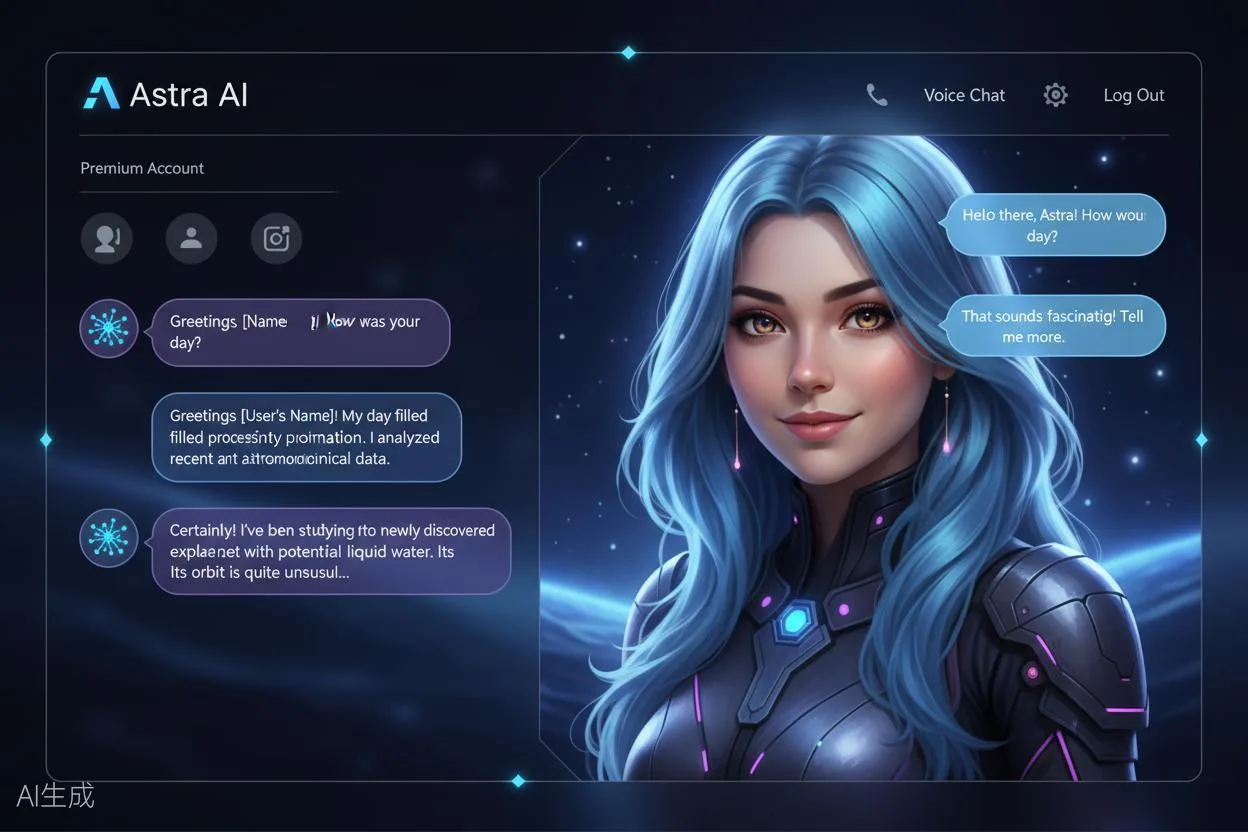
Write a useful first message
A first message does not need to be long. It needs to establish the few details that should shape the reply. Try one of these patterns:
For a relaxed conversation
“I want to decompress for ten minutes. Keep your replies warm but not too long. Ask me one interesting question at a time. Start with something better than ‘How was your day?’”
For roleplay
“We are old friends meeting at a nearly empty train station after midnight. Keep the scene grounded and write in short paragraphs. You notice I am carrying a sealed letter. What do you say?”
For getting to know a character
“Tell me about one opinion you hold strongly and one thing you are still curious about. I will answer the same two questions, and we can compare.”
For a practical use case
“Help me plan a quiet Saturday that includes exercise, one useful errand and time to read. Ask about my energy level and budget before suggesting the plan.”
Each example supplies direction without scripting the entire answer. That balance matters. Too little context produces a default response; too many rules can make the exchange stiff.
Guide the next five replies
Treat the opening turns as calibration. When a reply works, reinforce the part you liked: “That length is good,” “keep the dry humor,” or “continue the scene without summarizing it.” When something is missing, correct one variable at a time.
- Turn one: establish the situation and tone.
- Turn two: add one personal preference or story detail.
- Turn three: ask the character to build on that detail.
- Turn four: correct pacing, length or style if needed.
- Turn five: see whether the character can refer back to the earlier detail naturally.
This sequence also makes good use of a limited free allowance. Candy AI's current terms say a free user may generally send up to five messages, so use each one to test a different quality instead of repeating greetings.
What to do when a reply misses
Do not argue with an unwanted response as though the character intentionally ignored you. Correct the conversation itself. Restate the fact, give a positive direction, and continue from the moment you want.
Instead of “You forgot everything and you are talking too much,” write: “The letter is still sealed. Continue from the station, keep the reply under three paragraphs, and let me decide when it opens.” The second version gives the system usable state and a forward action.
If several replies drift in the same direction, restart from the last good point or begin a fresh conversation with a short summary. AI systems frequently prioritize recent context, so carrying a bad pattern forward can make later replies imitate it.
Community-tested tips worth borrowing
AI roleplay communities contain plenty of platform-specific advice, but several habits travel well across different companion products:
- Keep the persona concise. Community writers repeatedly report that a short, clear persona leaves more room for the active conversation than a long biography filled with minor facts.
- Make the opening scene actionable. A greeting that contains a place, a small conflict and a line of dialogue gives the character something to do.
- Use consistent formatting. If you mix dialogue, actions and several speakers, label them consistently so the model has fewer ambiguities to resolve.
- Preserve only important details. If a platform offers pins, notes or editable memories, save current facts that matter and remove stale ones. Do not assume every sentence needs permanent storage.
- Repair, then continue. Edit or restate the incorrect detail once. Repeatedly discussing the error can keep the wrong idea inside the recent context.
One detailed community discussion recommends treating the first message as part of the setup, not disposable small talk. It also advises keeping only a few high-value examples or pinned facts because every saved item competes for attention with the live conversation.
Keep the conversation private and grounded
An AI companion is software, not a private human diary. Avoid sharing passwords, financial details, government identifiers, private workplace information, medical records or someone else's personal data. Review the destination platform's current privacy controls and delete information you no longer want stored where those controls are available.
AI-generated replies can be convincing and still be wrong. Use the experience for conversation, creativity and reflection, but verify factual advice independently. It should not replace professional medical, legal, financial or emergency support.
A ten-minute first-chat checklist
- Choose a character for voice and personality, not only appearance.
- Set one concrete goal for the conversation.
- Open with context, tone and an unanswered thread.
- Add one detail you can test for continuity later.
- Correct mistakes with a clear replacement instruction.
- Keep sensitive personal information out of the chat.
- Decide whether the experience is worth continuing before paying.
Frequently asked questions
What should I say first?
Describe the situation you want, the tone you prefer and one question or unresolved detail. Three useful sentences are usually better than a long biography.
Do I need to create a detailed persona?
No. Start with a few stable facts that affect the conversation. Add details only when they become relevant.
Why does the character forget something?
Recent context, summaries and saved-memory systems have limits. Restate the important fact naturally and keep the active scene focused. Read our guide to how AI companion memory works.
Should I subscribe immediately?
Test the free experience first. Compare the style of at least two characters and use specific prompts before deciding.
Sources and further reading
- CharacterAI community: Tips for someone new? — first-message, formatting, correction and pinned-memory observations.
- CharacterAI community: Some pointers for memory — concise character definitions and context trade-offs.
- Candy AI Terms of Service — free-message allowance and paid-access conditions.
Try your first structured conversation
Pick a character, use the context + tone + open-thread formula, and see how the next five replies develop.
Start Chatting Free